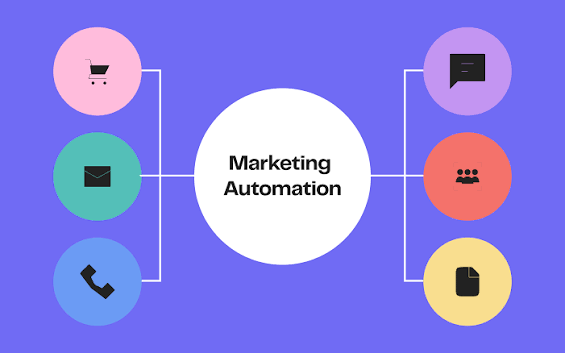
When small business owners hear "marketing automation," many picture complex enterprise software requiring a dedicated IT team to operate. The reality in 2025 is very different. Modern automation platforms have democratized capabilities that were previously available only to large corporations, and the businesses taking advantage of them are growing significantly faster than those relying solely on manual processes.
The Manual Marketing Trap
Most small businesses are caught in a cycle: when business is slow, they have time for marketing but not enough budget. When business is good, they have budget but not enough time. This boom-and-bust pattern is the #1 cause of inconsistent growth — and marketing automation is the solution.
Automation creates consistency without requiring constant time investment. Once your workflows are built, they run 24/7, nurturing leads, following up with customers, and moving people through your sales process while you focus on delivering exceptional work.
Five Automations Every Small Business Should Have
You don't need dozens of complex automations to see results. Start with these five foundational workflows that address the most common revenue leaks in small businesses.
- Lead capture and immediate follow-up sequence
- Post-purchase onboarding and welcome series
- Review request automation (sent at the optimal time)
- Re-engagement campaign for inactive customers
- Appointment reminder and confirmation sequence
Choosing the Right Platform
The best automation platform is the one your team will actually use. For most small businesses, an all-in-one platform that combines CRM, email marketing, and automation workflows is more practical than trying to integrate multiple specialized tools.
Look for platforms with visual workflow builders, strong email deliverability, robust reporting, and the specific integrations your business needs. The learning curve matters — a slightly less powerful platform that your team masters will outperform a sophisticated one that never gets fully implemented.
Measuring the Impact of Your Automations
The primary metrics for automation ROI are time saved per week, lead-to-customer conversion rate improvement, average customer lifetime value change, and revenue from previously lost leads that were re-engaged.
Most businesses implementing their first five automation workflows report saving 10-15 hours per week while simultaneously improving their conversion rates. For a small business, that's transformative — both in terms of capacity and profitability.
Key Takeaway
Marketing automation levels the playing field for small businesses competing against larger, better-resourced competitors. By systematizing your follow-up, nurturing, and customer retention processes, you can deliver a consistently excellent customer experience without burning out your team. The key is starting simple — implement one automation, measure its impact, then build from there. Within six months, you'll wonder how you ever managed without it.